
Five hundred families and a forest you can eat
Our Mexican vanilla does not come from a commodity broker.
Date
/
/

Our Mexican vanilla does not come from a commodity broker. It comes through Bosques Comestibles (AMEBOSCO), an association based in Coatepec, Veracruz, working with rural farming families across Veracruz, Puebla, Oaxaca and Hidalgo — five hundred families to date, thirty-three hectares certified organic, two hundred more under ecological restoration, five community nurseries.
Their model is the edible forest, and it stands on three pillars: food the families grow for themselves, crops grown for income — our vanilla among them — and the planting and conservation of native trees. The vanilla is grown on agroecological plots inside that system and cured by hand in Papantla over a thirteen-month cycle. When we say short chain, this is what we mean: you buy a pod, a family gets paid, a forest keeps standing.
Where it grows
Vanilla planifolia, grown agroecologically inside edible forests in Veracruz, Puebla, Oaxaca and Hidalgo. The chain is deliberately short: from the forest to the processing centre to us, through AMEBOSCO — the Mexican association of edible forests — and more than five hundred producer families.
How it is cured
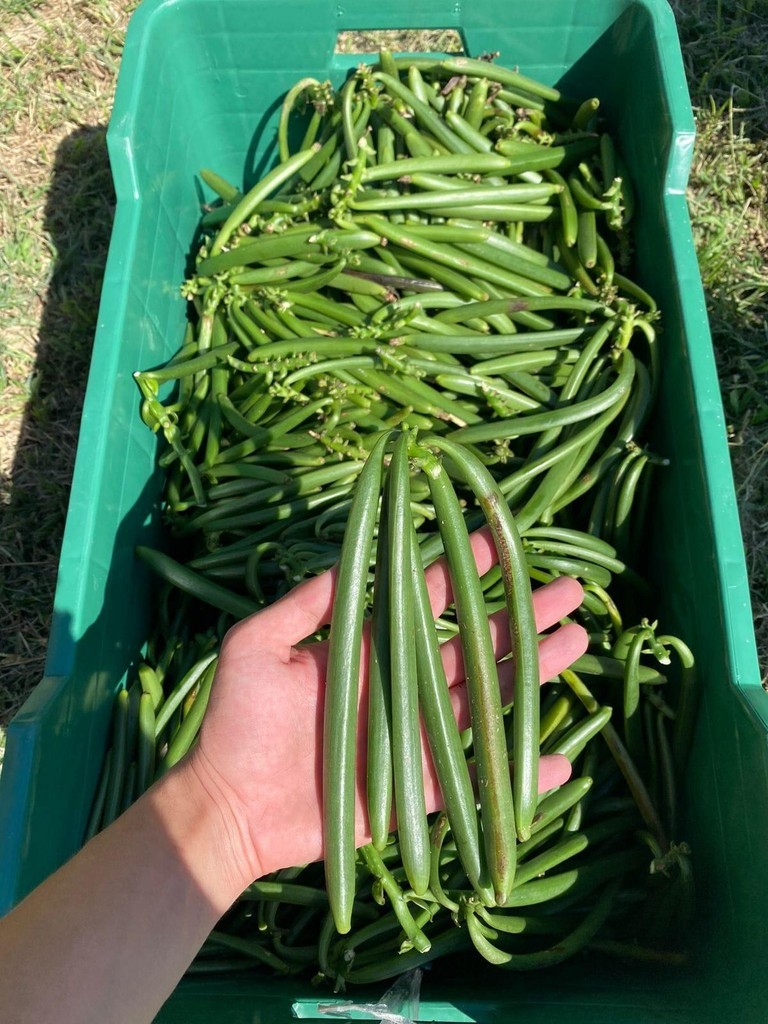
Harvest is November. From flower to finished pod the cycle runs thirteen months, five of them drying in the sun. Nothing is forced.
What we buy
Gourmet grade: sixteen to twenty centimetres and longer, thirty to thirty-four per cent moisture, vanillin above two per cent. That is the fleshy pod that still bends, not the dry stick. It arrives vacuum-packed by the kilo, twenty-five kilos to a box.
What it tastes like
Cinnamon, red forest fruit and chocolate, with tobacco and leather sitting behind them. The taste is intense and it holds through a hot custard, which is the only test that matters to us.


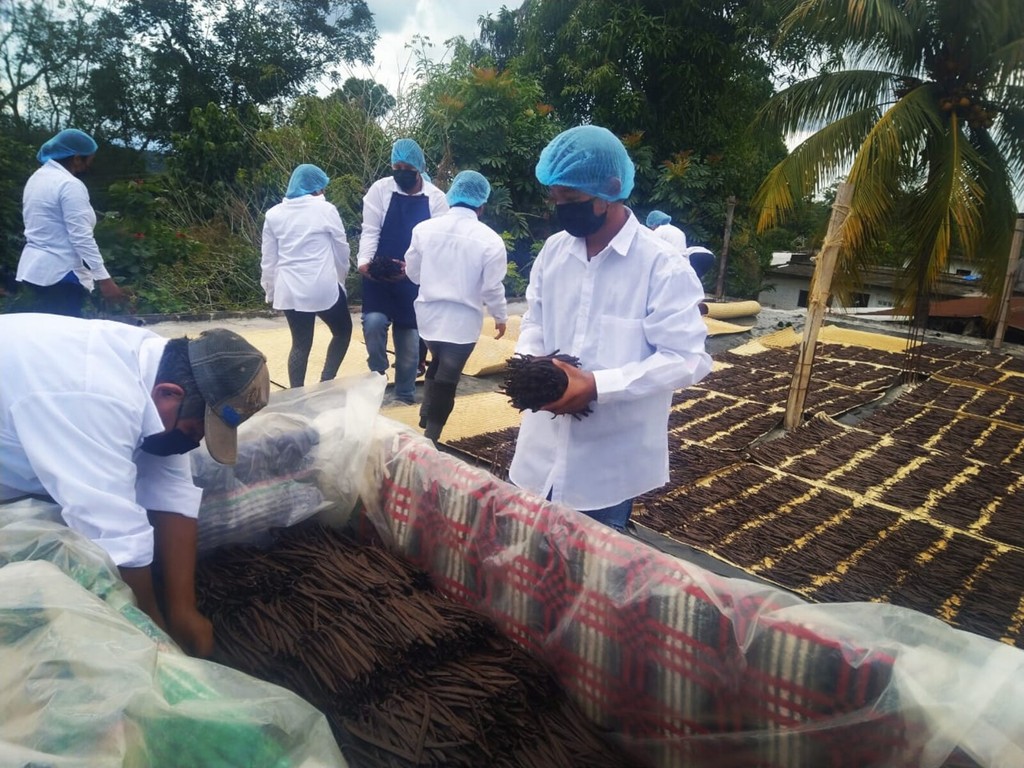


The Papa José processing centre. This is where the pods are sorted, graded and packed.
The same vanilla, in kitchen-sized formats.
Latest Articles.
Thoughts, ideas, and perspectives on design, simplicity, and creative process.

